The Proximity Fix for Profiles That Only Rank Within One Mile
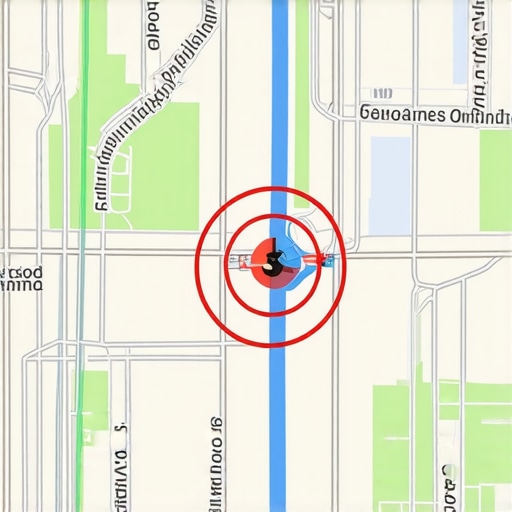
There is a specific kind of frustration reserved for the business owner who opens Google Maps at their office, sees their business in the #1 spot, and then drives two blocks to a coffee shop only to find they have vanished from the search results entirely. If you have ever felt like your business is trapped in a “one-mile bubble,” you aren’t imagining it. You are a victim of the Proximity Filter.
As a Local SEO consultant, I see this daily. Businesses invest thousands into their google business profile seo, yet they can’t seem to reach customers just a few minutes away. In the current landscape of 2025 and looking toward 2026, Google’s algorithm has become increasingly sensitive to distance. However, the “One-Mile Trap” is not an unbreakable law; it is a symptom of a profile that lacks the necessary authority to override the default proximity settings.
To break out, we must look at the P-R-P model: Proximity, Relevance, and Prominence. While Proximity accounts for roughly 20-25% of the ranking algorithm, it is the only factor you cannot physically “optimize” – you can’t move your building every time someone searches. To expand your reach, you must over-perform in Relevance and Prominence to force Google to ignore the distance. If you’ve been wondering Why Your Business Only Ranks Within a 1-Mile Radius and How to Expand It, the answer lies in building a geographic authority that outmuscles the map’s default zoom level.
Decoding the Google Maps Algorithm (2025-2026 Context)
The days of simply “setting and forgetting” your GMB listing are long gone. The google maps ranking system has evolved into a sophisticated engine driven by what Google calls “Neural Matching.” This AI-driven process allows Google to understand the intent behind a query rather than just matching keywords. It means Google is getting better at deciding when a user is willing to drive further for a better result.
In the 2025-2026 context, Google Business Profile (GBP) signals now account for a staggering 30-35% of the total ranking weight in the local pack. This is a shift away from traditional website-based signals toward on-platform engagement. Google wants to see that your business isn’t just a point on a map, but a living entity that users interact with. When the algorithm sees high engagement, it rewards the business by “stretching” its visibility. If Google trusts your business more than the one next door to the user, it will move you up the rankings, even if you are three miles away and the competitor is three blocks away.
My philosophy as a consultant has always been: Local SEO is 50% Infrastructure and 50% Marketing. Most businesses fail because they treat their profile as a static yellow-pages listing. To beat the proximity filter, your infrastructure (the technical setup of your profile and website) must be so robust that the algorithm views your business as the “definitive” choice for the entire city, not just your immediate neighborhood.
Relevance: The Foundation of Expansion
If Proximity is where you are, Relevance is what you are. To rank further away, you must prove to Google that your business is the most relevant match for a specific search query. This starts with a deep dive into your categories and services. Many businesses make the mistake of choosing one primary category and ignoring the rest. To maximize relevance, you need a strategic “category stack.”
Your primary category should be the most specific match for your core business, but your secondary categories are your expansion tools. For example, a “Personal Injury Lawyer” should also utilize “Trial Attorney,” “Legal Services,” and “Law Firm.” However, the real secret lies in the “Pre-defined Services” menu. Google provides a list of suggested services based on your categories. Selecting these – and adding custom descriptions for each – creates a web of relevance that the google business profile audit tool can identify as a “complete” entity.
Data shows that complete profiles are 70% more likely to attract visits than incomplete ones. But relevance isn’t just about ticking boxes; it’s about “Entity Seeding.” This involves mentioning your services in your GBP posts, your Q&A section, and even encouraging customers to mention specific services in their reviews. When Google’s Neural Matching sees a consistent thread of “Water Heater Repair” across your profile, website, and reviews, it becomes much more confident in showing your business to a user five miles away who is searching for that exact term.
The “Pre-defined Services” Secret
- Audit your current list: Remove services you don’t actually provide, as “service dilution” can hurt your primary ranking.
- Use Custom Services: If Google doesn’t suggest a specific niche service, add it manually. This helps with long-tail local searches.
- Link to Service Pages: Ensure every service mentioned on your GBP has a corresponding, high-quality page on your website.
Prominence: Breaking the Distance Barrier
Prominence is Google’s measure of your business’s “fame” or authority. This is the primary lever we pull to break the one-mile trap. If you have 500 high-quality reviews and your competitor has 15, Google will almost always favor you, even if the competitor is closer to the searcher. This is because Google’s primary goal is user satisfaction; they would rather send a user to a trusted business five miles away than a questionable one five hundred feet away.
However, not all reviews are created equal. To expand your radius, you need geographic relevance within your reviews. When a customer leaves a review saying, “Great service,” it helps your overall score. But when a customer says, “Best plumber in [Neighborhood Name]! They came out to [City Name] and fixed my leak fast,” they are providing Google with a geo-signal. This tells the algorithm that your business is active and trusted in those specific areas. This is why many businesses find that Why Your Five-Star Reviews are Failing to Move Your Map Rank is often due to a lack of geographic and keyword context within the feedback.
Review velocity – the speed at which you acquire new reviews – is also a critical factor in the 2025 algorithm. A sudden stall in reviews signals to Google that the business may no longer be as prominent as it once was, causing the ranking radius to shrink back to the immediate vicinity. Using local seo ranking tools to track your review growth against competitors is essential for maintaining a wide reach.
Building Prominence Through Authority
- Review Responses: Always respond to reviews, and naturally include the city or neighborhood name in your response (e.g., “We love serving the downtown community!”).
- Local Citations: Ensure your Name, Address, and Phone number (NAP) are consistent across the web, but focus on quality over quantity. Local chamber of commerce links are worth 100 generic directory links.
- Inbound Links: Backlinks from local news sites, blogs, or community organizations act as “votes of confidence” for your geographic authority.
Hyperlocal Content & Geo-Signals
To truly “stretch” your map rankings, your website must do the heavy lifting of anchoring your business to multiple locations. This is where “Neighborhood Pages” and “Service Area Pages” come into play. If you are a Service Area Business (SAB), you don’t have a physical storefront for customers to visit, which makes the proximity filter even more aggressive. You must follow A Simple Checklist for Service Area Businesses to Rank in Multiple Neighborhoods to ensure you aren’t being ghosted by the algorithm.
A Neighborhood Page isn’t just a page with a map on it. It should contain hyperlocal content: mentions of local landmarks, nearby businesses, community events, and specific projects you’ve completed in that area. For example, a roofer shouldn’t just say they serve “North Chicago.” They should have a page titled “Roofing Services in [Neighborhood Name]” that features photos of houses they’ve worked on in that specific zip code and mentions the local high school or park. This creates a “Geo-Fence” of relevance that Google recognizes.
Off-page geo-signals are equally important. This includes getting mentioned in local digital press or sponsoring a local little league team that links back to your site. These signals anchor your relevance to a wider region, proving to Google that your “prominence” extends far beyond your front door. When the algorithm sees these signals, it expands the “bubble” of your map visibility, allowing you to capture leads from the entire metropolitan area rather than just your street.
Technical Fixes & 2026 Trends
As we move toward 2026, the technical side of google maps seo tools is becoming more complex. One of the most common issues I see is Local Schema errors. Schema markup is a piece of code that tells search engines exactly what your data means. If your website’s LocalBusiness Schema is broken or conflicts with your GBP data, Google will default to the most conservative ranking possible – usually a very tight radius around your physical location.
Furthermore, the rise of AI search (like Perplexity and Google’s own Gemini-integrated Search Generative Experience) is changing how local discovery works. These AI models look for “consensus” across the web. They don’t just look at your profile; they look at what people are saying about you on Reddit, Yelp, and local forums. If the “consensus” is that you are the best provider in the city, the AI will recommend you regardless of the user’s proximity. This is a shift from “Distance-based Search” to “Authority-based Recommendation.”
Another technical hurdle is the “Latency Filter” and “Ghost Competitors.” Sometimes, Google will hide your profile because it deems another business (the “Ghost Competitor”) as more relevant for that specific zoom level. To combat this, you need to ensure your profile has zero “trust issues.” This means no duplicate listings, no keyword stuffing in the business name, and a verified physical address that isn’t a P.O. Box or a co-working space. Use a google business profile audit tool to identify these technical red flags before they shrink your radius.
Conclusion & Action Plan
Breaking the one-mile trap requires a shift in mindset. You must stop thinking about “ranking” and start thinking about “dominating.” Proximity is a suggestion, but Relevance and Prominence are the rules. By focusing on the P-R-P model and building a robust hyperlocal infrastructure, you can force the Google Maps algorithm to recognize your business as the premier choice for your entire service area.
Your Monday Morning Checklist:
- Audit your GBP categories and services for maximum relevance.
- Implement a review strategy that encourages geographic mentions.
- Build three new Neighborhood Pages on your website with hyperlocal content.
- Check your Local Schema for errors using an audit tool.
- Review the Mastering Maps Ranking: Essential Checklist for 2025 Success to ensure you haven’t missed any foundational steps.
Don’t let a one-mile radius define your business’s growth. Take control of your geographic authority today and start appearing where your customers actually are.