How to Rank a Service Area Business Without a Single Office in Town
The “Invisible” Business Dilemma: Why SABs Struggle to Exist on the Map
Imagine you are the best roofer in the tri-state area. You have the trucks, the crew, and hundreds of happy customers. But when a homeowner three towns over searches for “roofing repair near me,” you are nowhere to be found. Why? Because you don’t have a physical storefront in that specific town. This is the “Invisible Business Dilemma” that every Service Area Business (SAB) faces in 2026.
As Arslan Abid, a Local SEO Expert, I’ve seen this play out thousands of times. Traditional brick-and-mortar businesses have it easy – they have a physical pin on the map. But for plumbers, electricians, landscapers, and mobile locksmiths, the map is a battlefield where you are often fighting with one hand tied behind your back. Proximity remains the #1 ranking factor in Google’s local algorithm, yet for an SAB, proximity is the very thing you lack by definition.
Research from platforms like Reddit and various local SEO forums confirms that “near me” and “city + service” queries are the highest-converting traffic sources for service providers. If you aren’t in that top three Map Pack, you are losing money to competitors who might be less skilled but have a better-optimized google business profile seo strategy. The frustration is real: you are a legitimate business that “doesn’t exist” to Google because you lack a lobby. However, ranking is possible. It just requires a shift from “where we are” to “where we serve.” This is exactly why your business only ranks within a 1-mile radius and how to expand it.
Technical Setup: The Google Business Profile Foundation
The biggest mistake most SAB owners make happens during the very first step: the setup. In 2026, Google is more aggressive than ever with suspensions. If you try to game the system by using a P.O. Box, a virtual office, or a friend’s house where you don’t actually work, you will be flagged. I’ve documented the fallout of these mistakes in my guide on what we did after Google suspended our business profile without a warning.
Choosing Between SAB vs. Hybrid
Google gives you two choices. A pure Service Area Business hides the address and defines a service boundary. A Hybrid Business shows the address because they have a physical location (like a showroom) AND they serve customers at their locations. For most of you, the pure SAB model is the only compliant path. To stay in Google’s good graces, you must hide your residential address. If you allow customers at your home office, you must have permanent signage and be staffed during business hours to qualify as a Hybrid.
The 20 Service Area Limit
Google Support documentation is clear: you can list up to 20 service areas in a single profile. These can be cities, counties, or zip codes. However, don’t just list 20 random spots. Focus on areas where you actually have a high density of customers. Over-extending your service area without corresponding “prominence” (reviews and backlinks) from those areas can actually dilute your local authority. For a deep dive into technical setup, utilizing google business profile optimization services can ensure your foundation is rock solid.
When setting up your google maps ranking service, ensure your primary category is hyper-specific. Don’t just pick “Contractor” if you are a “HVAC Contractor.” The more specific the category, the less you have to fight the proximity hurdle through sheer volume.
Solving the Proximity Paradox
The Proximity Paradox is the reality that Google prefers to show the business closest to the searcher. For an SAB, your “pin” is technically your verified home or warehouse address, even if it’s hidden. This creates a “ranking bubble.” To break out of this bubble, you need to master the other two pillars of local SEO: Relevance and Prominence.
The Ghost Competitor Problem
In many lucrative niches, the Map Pack is cluttered with “ghost competitors” – lead generation sites using fake addresses to steal clicks. To rank, you often have to clear the field. I recommend following these 3 GMB checklist steps to remove 2026 ghost competitors. Once the spam is gone, your legitimate business has room to breathe.
Visualizing the Bubble
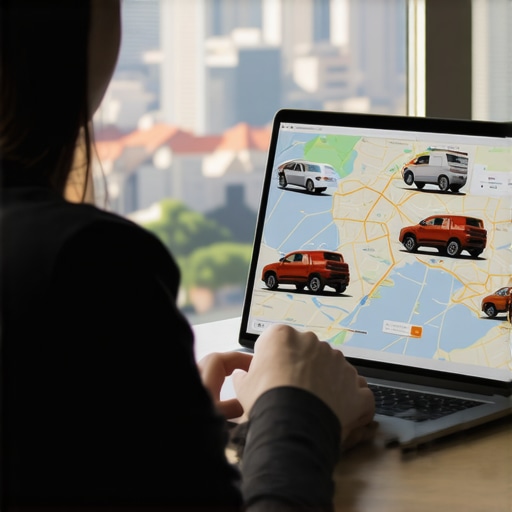
You cannot fix what you cannot measure. You need to use a google maps rank tracker to see exactly where your visibility drops off. If you rank #1 in your neighborhood but drop to #15 just two miles away, you have a proximity problem. You solve this by signaling to Google that your “relevance” extends beyond your home base. Using advanced local seo software allows you to track these coordinates and adjust your strategy based on real-time data.
The Power of Hyperlocal Content & City Pages
If your Google Business Profile (GBP) is the “what,” your website is the “why” and “where.” To rank in a city where you don’t have an office, you must build an organic-to-map connection. This is done through high-quality, non-spammy city pages.
- Avoid Doorway Pages: Do not just copy-paste the same text and swap the city name. Google’s 2026 helpful content updates will bury these.
- Unique Neighborhood Photos: When your crew is out on a job in a specific suburb, take photos. Upload them to the specific city page and your GBP. This provides metadata and visual proof that you actually work in that area.
- Neighborhood-Specific Case Studies: “We just finished a roof replacement in the Oakwood neighborhood of Dallas.” This tells Google’s “Neural Matching” algorithm that you are a relevant entity for that specific geography.
Reddit insights from successful SAB owners suggest that building multiple location pages and ensuring they are indexed with unique local schema is the most consistent way to drive Map Pack appearances in remote service areas. For a step-by-step approach, refer to a simple checklist for service area businesses to rank in multiple neighborhoods. These pages act as the “anchor” for your local authority, even without a physical office.
Trust Signals: Reviews and Citations for SABs
Authority for an SAB is built on the backs of your customers. Since you don’t have a public Name, Address, and Phone (NAP) listed on the map, your digital footprint elsewhere must be impeccable.
The Review Strategy
Don’t just ask for a review; ask for a specific review. When a customer in “Springfield” leaves a review, ask them to mention the service and the location: “Arslan did a great job with my water heater repair here in Springfield.” When Google sees multiple reviews mentioning specific neighborhoods, it expands your ranking radius for those areas. This is a core part of any modern google review strategy.
Citation Cleanup
Even though your address is hidden on Google, it exists on the web. Inconsistent NAP data across Yelp, Angi, and the Yellow Pages can tank your rankings. You need citation building services that understand how to handle “hidden address” profiles. Incorrectly formatted citations are one of the top reasons SABs fail to rank. I’ve outlined the most critical fixes in my guide on 4 specific citation moves to help you dominate your local niche. Using professional local seo tools can automate the discovery of these inconsistencies.
Future-Proofing for 2026: AI Search & Generative Answers
The landscape of local search is shifting. We are moving away from a simple list of links to AI-generated answers from Perplexity, Gemini, and Google’s own AI Overviews. For an SAB, this is actually an opportunity.
AI search engines don’t just look at proximity; they look at Entity Authority. They scrape your website, your reviews, and local news mentions to decide if you are the “best” recommendation. To win in this environment, your structured data (Schema) must be perfect. You need to use LocalBusiness and ServiceArea schema to explicitly define your boundaries to the AI crawlers. If you want to stay ahead, you must learn how to win local clicks from Perplexity and Gemini AI search.
Neural Matching – the way Google understands synonyms and concepts – means that if you are mentioned in a local blog or a neighborhood Facebook group, Google can connect those dots back to your GBP. This “prominence” is what eventually overrides the proximity factor, allowing you to rank 10 or 20 miles away from your base.
Conclusion: The Marathon of Local Relevance
Ranking a Service Area Business in 2026 is not a “set it and forget it” task. It is a marathon of building local relevance through consistent content, strategic reviews, and technical precision. Because you don’t have a physical storefront to act as a permanent beacon, your digital presence must be twice as loud.
Start by auditing your current standing. Use a google business profile audit tool to see where your gaps are. Are your citations messy? Is your service area too broad? Are your reviews missing location keywords? Once you identify the leaks, you can start the process of expansion. If you are ready to take your visibility to the next level, you can boost google business profile ranking by utilizing the right suite of professional tools and expert strategies.
Remember, the map is not the territory – but in the world of local SEO, the map is where the money is. Download my Maps Ranking Checklist to ensure you haven’t missed a single step in your journey to dominating your service area.