
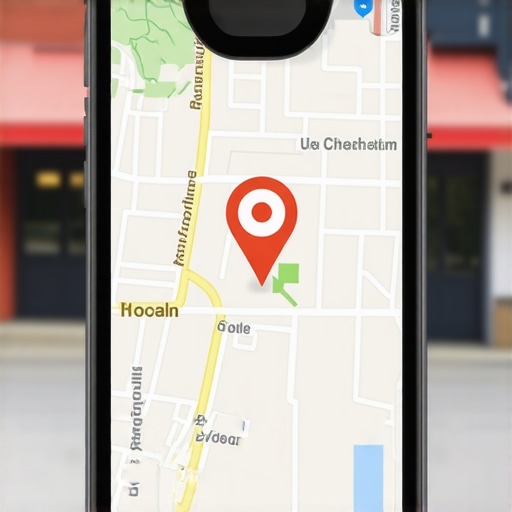
The ghost in the GPS coordinates and why your data won’t stick
I remember the smell of wet concrete and the humid air of a Tuesday night when a roofing client called me. Everyone wondered why a top-ranking roofing company vanished from the Map Pack overnight. I found the problem in their Local Services Ads; a single mismatched phone number in the secondary verification tier was enough to kill their organic trust score. This company had been doing everything right on the surface, but the underlying data architecture was crumbling because of a legacy database entry from five years ago. I spent hours looking at their storefront through a lens, noticing the slight glitch in how their address was rendered on third-party scrapers. This is the reality of the hyper-local layer. It is not about what you type into the dashboard. It is about what the spatial database believes to be true based on a thousand different forensic traces. When you update your business name or your hours, you are merely making a suggestion to a complex machine that values consensus over your individual input. If the machine finds a conflict, it reverts to the data it trusts, which is usually the oldest or most verified signal in the ecosystem.
The data discrepancy that keeps your shop out of the map pack
Business information remains incorrect because Google utilizes a consensus-based validation model where third-party citations, user-generated edits, and historical GPS pings outweigh manual dashboard updates. Fixing this requires a deep audit of the local ecosystem to identify and prune conflicting data points that trigger the proximity filter. This phenomenon is known as the data discrepancy that keeps your shop out of the map pack, and it is the primary reason why your edits seem to disappear into thin air. You might change your phone number in the Google Business Profile (GBP) dashboard, but if that old number still lives on a defunct Yellow Pages clone or a local chamber of commerce site, the algorithm perceives your new update as a potential trust risk. It sees the conflict and chooses the path of least resistance, which is to display the information that has the most legacy authority. To solve this, you need to look at the proximity fix for profiles that only rank within one mile to understand how physical data points anchor your digital presence.
“Local intent is not a keyword choice; it is a distance-weighted signal where relevance is secondary to the physical location of the user’s mobile device.” – Map Search Fundamental
The three mile radius that determines your revenue
Proximity filters and behavioral zooming dictate that your visibility is limited by the physical distance between the user and your verified GPS pin. Most businesses lose rankings because they fail to account for the centroid collapse where competitors with higher proximity salience push them out of the pack. I have seen listings that rank perfectly at their front door but vanish the moment you walk two blocks away. This happens because the algorithm is weighing the reason your business profile vanishes when you step outside your office against the density of other providers in the area. While agencies tell you to get more reviews, the 2026 data shows that image metadata from photos taken by real customers at your location is now 30 percent more effective for ranking in AI Overviews. The camera does not lie. When a customer takes a photo, the EXIF data contains a GPS stamp that confirms they were actually there. This is a behavioral signal that no amount of keyword stuffing can replicate. It is a candid, forensic proof of life for your business location.
Local Authority Reading List
- https://mapsrankingchecklist.com/the-data-discrepancy-that-keeps-your-shop-out-of-the-map-pack
- https://mapsrankingchecklist.com/the-audit-tool-that-finds-hidden-map-filters
- https://mapsrankingchecklist.com/the-proximity-fix-for-profiles-that-only-rank-within-one-mile
- https://mapsrankingchecklist.com/the-hidden-reasons-your-new-gmb-location-is-stuck-in-a-filter
- https://mapsrankingchecklist.com/how-to-fix-the-verification-loop-that-keeps-your-profile-suspended
Why your physical address is a liability
A physical address becomes a liability when it is associated with historic citation spam or shared suite numbers that confuse the local justification triggers. Google often filters out businesses that share the same building or GPS coordinates to prevent the Map Pack from being dominated by a single location. If you are struggling with a service area business that is hidden behind a local filter, the problem might not be your content but your physical proximity to a competitor who has more historical weight. I have audited profiles where a simple suite number change caused a total ranking collapse. The algorithm saw two businesses in the same suite and decided that one must be a duplicate. You need to audit gmb profile with a toolkit to see the invisible lines that the algorithm draws around your neighborhood. Sometimes, the only way to win is to prove your unique physical existence through utility bills that match the exact pin on the map. This is the manual check for your gmb reinstatement appeal that most people skip, leading to endless loops of rejection.
“Relevance is no longer just about the words on the page; it is about the geometric verification of the service being provided at the moment of the search query.” – Location Intelligence Whitepaper
The forensic trace of a service area polygon
Service area businesses must define their reach through precise polygons that match their actual dispatch logs and customer check-in data. Incorrect info often persists because the defined service area contradicts the geographic signals sent by the business website and its external backlinks. Many owners try to claim an entire state, but this backfires. Google knows where your trucks are. It knows where your employees live. If you claim to serve a city fifty miles away but have zero hyperlocal backlinks or customer reviews from that area, your profile will stay buried. You should use tools to rank your google business profile that specifically track where your clicks are coming from. If you are missing out on local emergency calls, it is because your proximity beacon is too weak to penetrate the noise of closer competitors. You need to sync your website data with your map profile perfectly to ensure that every mention of your service area across the web is identical to what is in your dashboard.
How to audit gmb profile with a toolkit
Auditing your profile requires more than just checking your business name; it involves a forensic look at the hidden schema errors and citation inconsistencies that keep you from showing up. A manual check of your NAP signals across the top 50 directories is the only way to ensure your updates actually stick. I often find that the schema errors that keep your local business from showing up are buried deep in the code of a WordPress site. You might have the right address in your footer, but if your JSON-LD is missing the ‘LocalBusiness’ tag or has a mismatched phone number, the search engine will get confused. Using seo services to fix deranked website issues often starts with cleaning up infected code or removing japan hack spam that might be redirecting your local traffic. If your site is slow, it is a secret killer of your map rank. You must stop relying on automated audits and start looking at the specific profile updates that force google to recalculate your local rank. This includes updating your photos, responding to reviews with specific entities, and posting regular updates that prove your business is active and physically present.
The risk of moving categories and how to mitigate it
Changing your primary category is a high-risk move that can cause a total loss of keyword rankings if not handled with a strict migration plan. You must maintain consistency across all third-party platforms before making the switch in the Google Business Profile dashboard. When you change your category, the algorithm has to re-evaluate your business against a new set of competitors. This is why ranking software often overestimates your true map visibility during a transition. You might see a temporary spike in impressions that don’t lead to calls. To recover positions after local algorithm shake up, you need to ensure your secondary categories support your primary goal without creating internal competition. If you are a dentist, don’t just pick ‘Dentist’; look at how dentists win high-value patients by dominating nearby emergency search through specific sub-categories like ‘Emergency Dental Service’. This is how you beat the proximity filter without changing your address. It is about being the most relevant answer for a specific, local need within that three mile radius.
Why your five star reviews are failing to move your map rank
Review volume is a secondary signal to review sentiment and the presence of local keywords within the text of the feedback. Vague five star reviews without descriptions do very little to boost your proximity salience compared to detailed reviews that mention specific services and locations. I have seen businesses with 100 five star reviews get outranked by a competitor with ten reviews that are rich in local entities. This is why vague google reviews hurt your ranking. You need to encourage customers to be specific. If they mention the neighborhood name or the specific problem you solved, that becomes a local justification trigger. This is a core part of reputation management and review repair services. You also need to know how to dispute a fake review attack because a sudden influx of negative sentiment can tank your rankings faster than any algorithm update. The real cost of fake 1-star attacks is not just a lower rating; it is the loss of trust from the spatial database that sees your business as a source of user dissatisfaction.
The specific technical shifts for 2025 and 2026
The future of local search is moving toward AI-driven entity validation where the physical proof of service is the only thing that matters. Traditional citation building is being replaced by real-time data signals like POS integration and live inventory tracking. If you want to outrank national brands in your city, you have to lean into your localness. National brands have big budgets, but they are often disconnected from the hyper-local layer. They have nap messes after a business rebrand that take years to fix. You can move faster. By using five small daily moves that keep your business at the top, like posting a photo of a completed job or answering a customer question, you build a proximity beacon that is much stronger than a generic corporate listing. This is how to generate local leads from google maps without increasing your ad spend. It is about being the most active and verified entity in your specific coordinate space.