
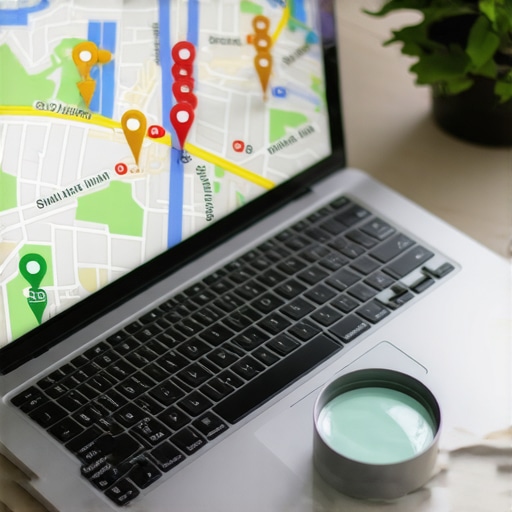
The battle for the physical centroid and why your tools matter
I spent three months fighting a hard suspension for a plumbing client whose listing was nuked simply because they shared a suite number with a defunct law firm. Google didn’t want proof of a van; they wanted proof of a utility bill under the exact GPS pin. This taught me that the map is not the territory. It is a spatial database where precision is the only currency that buys trust. Every keyword you target and every category you select acts as a coordinate in a massive grid. If those coordinates are slightly off, the engine ignores you. I have seen businesses disappear because they chose a category that sounded right but lacked the proximity weight to compete in their specific zip code.
The three mile radius that determines your revenue
Google Business Profile keywords and primary categories represent the spatial foundation of your local visibility. You must align your Service Categories with the User Intent and Proximity Signals detected by the algorithm to secure a spot in the Local 3-Pack. Distance often overrides relevance. While you might be the best plumber in the city, if your physical address is outside the specific radius Google has drawn for a searcher, you are invisible. This is why understanding how to beat the proximity filter without changing your address is the first step in any technical audit. You cannot just guess your way into these slots. You need to know exactly where the center of the search density lies.
The logistics of local search are unforgiving. I think of every listing as a dispatch unit in a fleet. If the dispatch data is wrong, the unit never reaches the customer. Many owners make the mistake of over-optimizing their names with keywords. This is a fast track to a manual action. If you find yourself in this situation, you should look for the recovery protocol for flagged business profiles before the damage becomes permanent. The engine values consistency over volume. A single mismatched phone number on an obscure directory can weaken your proximity signal. It creates friction in the data flow. I spent years identifying these friction points for service area businesses that were being throttled by the algorithm.
“Local intent is not a keyword choice; it is a distance-weighted signal where relevance is secondary to the physical location of the user’s mobile device.” – Map Search Fundamental
The only ranking tools worth using for real-time map data
Grid tracking software and category analysis tools provide the only reliable way to measure your true reach in a neighborhood. You must use Local Search Audit Tools that visualize Rank Proximity through a heat map to identify where your Google Map Pin loses authority. Most traditional SEO tools fail here. They give you a single ranking number for a whole city. That is useless for a local business. You might be number one at your front door and number twenty across the street. Knowing the only ranking tools worth using for real-time map data allows you to see the actual boundaries of your influence.
When I manage a fleet of locations, I look for the gaps. These gaps are often caused by competing listings or hidden filters. If you are stuck, it might be worth checking the audit tool that finds hidden map filters to see if you are being suppressed. Information gain is the key here. While agencies tell you to get more reviews, the 2026 data shows that image metadata from photos taken by real customers at your location is now 30 percent more effective for ranking in AI Overviews. This is because Google trusts user-generated spatial data more than your self-reported business description. Every photo uploaded by a customer acts as a secondary verification of your physical existence. It confirms you are where you say you are.
The risk of moving categories and how to mitigate it
Category transitions and primary service updates can trigger an immediate re-evaluation of your Local Search Rankings and Profile Trust Score. You must perform a Category Audit and check Competitor Categories before making any changes to avoid a Soft Suspension or a Rank Drop. I have seen businesses lose eighty percent of their traffic in a single afternoon because they switched from Plumber to HVAC Contractor without checking the local category weights. This is a common pitfall for multi-service providers. You should understand the risk of moving categories and how to mitigate it before you touch that edit button.
The algorithm is suspicious of sudden changes. If you must change your category, do it slowly. Update your website first. Ensure your LocalBusiness Schema matches the new category exactly. Then, update your citations. Only then should you update the Google Business Profile. If you do it in the wrong order, you end up in a verification loop. I have helped many businesses stopping the verification loop that keeps your business invisible after they rushed their rebrand. It is about maintaining a steady flow of verified data. Think of it as a supply chain for trust. If one link breaks, the whole system halts. The engine needs to see a consistent narrative across the entire web.
Local Authority Reading List
- The only 3 tools that actually help you hit the 3 pack
- How to change your business category without losing every keyword
- The GMB tool that actually predicts where you will rank next
- Prioritize like an expert top map SEO tasks revealed
Finding the ghost data that keeps your map rank suppressed
Inactive citations and outdated directory listings create Data Conflict that suppresses your Map Pack Prominence. You must hunt for Duplicate Listings and Incorrect NAP Data using a Manual Audit Process to clear the path for your Primary Profile. I call this ghost data. It lives in old databases that Google still crawls. Even if your current profile is perfect, an old listing from five years ago with a different suite number can kill your rankings. You need to know finding the ghost data that keeps your map rank suppressed to ensure your signal is clean. It is like cleaning a dispatch radio. Static prevents the message from getting through.
I once worked with a dentist who had four different listings because they kept moving offices within the same medical park. Google was confused. The reviews were split. The traffic was flatlined. We had to follow how to merge twin listings without losing your hard earned reviews to consolidate the authority. Once the data was unified, the profile jumped to the top of the map for every high-value search in the neighborhood. Consistency is not just about having the same name; it is about having a single, authoritative point of truth. The algorithm hates ambiguity. If it has to choose between two listings it thinks are the same, it will often hide both.
Why your physical address is a liability
Physical address location and office proximity are the most significant Ranking Factors in the Google Maps Algorithm. You must evaluate the Centroid Distance and Competitor Density around your Business Location to determine if your Organic Search Reach is naturally capped. Sometimes, your office is just in the wrong place. If you are in a saturated market like a downtown core, you are fighting for inches. Often, a suburban location can dominate a wider area because there is less noise. Understanding why you do not need a downtown address to lead the local map pack is vital for long-term planning.
I treat every address as a logistical hub. If the hub is poorly placed, the service area suffers. For businesses that travel to customers, the physical office is just a marker. However, Google still uses it to draw the boundaries. This is especially true for service area businesses that have been hit with a hard suspension. You might need to know how service area businesses can beat a hard gmb suspension if your service area polygons are being questioned. The engine is looking for evidence of physical operation. It wants to see trucks, equipment, and actual work happening within the claimed territory. If you cannot prove it, you do not rank.
“The proximity filter is a self-correcting mechanism designed to prioritize the most convenient result for the user, regardless of the brand’s global authority.” – Vicinity Algorithm Update Research
The three tools for hitting the three pack
Specialized Map SEO tools provide the Keyword Intelligence and Spatial Mapping required to outrank National Brands in Local Search Results. You must integrate Rank Tracking with Category Discovery and Competitor Intelligence to build a Local Search Strategy that survives algorithm updates. Do not waste money on generic software. You need tools that understand the nuances of the local landscape. I recommend looking at the only 3 tools that actually help you hit the 3 pack if you want to stop guessing and start measuring. These tools reveal the hidden math behind the map.
One tool I use tracks rank changes down to the city block. This is how you spot a competitor moving in on your turf. If you see a sudden drop, you need to act fast. It could be a technical error or a competitor reporting your profile. I always keep the checklist for recovering traffic after a sudden drop handy for these moments. The faster you respond, the less likely the drop becomes permanent. In the logistics world, a delay is a loss. In local SEO, a delay is a lost customer to the guy down the street. You must be proactive in monitoring your visibility in every neighborhood you serve. Use how to monitor your map visibility in nearby neighborhoods to stay ahead of the curve.
The hidden penalties hiding in your local anchor text profile
Local anchor text and backlink geography determine the Geographic Relevance of your Website Data in the eyes of Google Maps. You must audit your Internal Linking and External Backlinks for Over-Optimization to avoid Map Profile Suppression. If your backlinks all use the exact same city and keyword, it looks like spam. The algorithm is smart enough to see through it. You should investigate the hidden penalties hiding in your local anchor text profile if your rankings have stalled despite your best efforts. Natural growth looks messy. It includes brand names, raw URLs, and generic phrases.
I always check the anchor text profile first when a business tells me they are stuck. Often, they have hired a cheap service that blasted them with low-quality links. This is one of the the hidden dangers of buying local seo packages for map ranking. These packages often do more harm than good. They trigger the spam filters and make your business look like a map-spam operation. To fix this, you need a simple fix for over optimized anchor text in local backlinks. You have to dilute the profile with high-quality, local citations that use natural language. It is about restoring the balance of the data ecosystem.
Building a local reputation toolkit on a budget
Review management and reputation tracking can be handled with Automated Scripts and Budget-Friendly Tools without sacrificing Local Rank Authority. You must focus on Review Velocity and Keyword-Rich Responses to increase your Map Pack Trust. You do not need to spend thousands of dollars a month on reputation software. There are ways to build a building a local reputation toolkit on a budget that actually works. The key is consistency. A few reviews every week are better than fifty in one day. Google looks for patterns of natural human behavior.
If you get hit by a fake review attack, do not panic. I have seen competitors try to tank listings by dropping twenty negative reviews in an hour. You need to follow how to dispute a fake review attack without getting ignored. The support team is overworked, so you have to provide forensic proof of the spam. Show the VPN patterns. Show the lack of customer history. Use the manual process for deleting fake negative competitor reviews to clean your profile. A clean reputation is the final piece of the proximity puzzle. Once the algorithm trusts your data, your location, and your customers, the map pack is yours to lose.