
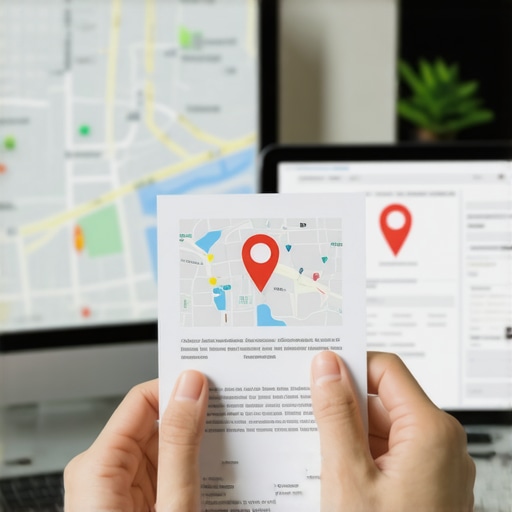
The smell of wet concrete often greets me during a morning site audit. It is the scent of a real business doing real work. When a Google Business Profile vanishes, that smell does not matter to a machine. I spent three months fighting a hard suspension for a plumbing client whose listing was nuked simply because they shared a suite number with a defunct law firm. Google did not want proof of a van. They wanted proof of a utility bill under the exact GPS pin. This is the reality of the spatial database we call a Map Pack. It is a dispatch system that relies on forensic evidence. To win, you must stop thinking like a marketer and start thinking like a logistics manager. Understanding the technical reasons for a shutdown is the first step toward recovery. You must identify if you are suffering from a proximity based ranking drop or a total manual removal. Dealing with a suspended business profile requires a cold, calculated approach to documentation and data consistency.
The nightmare of a shared suite number
To prove ownership of a Google Business Profile, you must provide a utility bill or tax document that matches your dashboard data exactly. The algorithm looks for a 100 percent match in the street name, the suite number, and the zip code. If your business is located in a co-working space or a building with multiple tenants, the proximity filters might flag you as a duplicate. I have seen listings disappear because a previous tenant never marked their old office as closed. This creates a conflict in the local index. You are not just fighting for a rank. You are fighting for the right to exist in the local search results. Many owners try to fix this by changing their name or category, but choosing the wrong business categories can trigger a secondary suspension. It is a trap. You must provide a video walk-through that shows the street sign, the building exterior, and your specific tools or office equipment. This is the only way to break the loop.
“Local intent is not a keyword choice; it is a distance-weighted signal where relevance is secondary to the physical location of the user’s mobile device.” – Map Search Fundamental
The ghost in the GPS coordinates
Proximity is the most powerful ranking signal in the current ecosystem. A business that ranks first in the city center might vanish when the user moves two blocks away. This happens because Google creates a proximity radius around your verified address. If you are a service area business without a physical office, your challenge is even greater. You must prove you operate in the neighborhoods you claim. Using a map priority list helps you focus your efforts on the streets that actually generate calls. Many agencies will tell you to build more citations, but citations alone are no longer enough to maintain visibility. The algorithm now looks for behavioral signals. It looks for how many people click for driving directions from a specific neighborhood. It looks for the metadata in the photos your customers upload. If your photos are all stock images, you are telling the machine you do not really exist at that coordinate.
The forensic trail of a utility bill
When you file an appeal, the human reviewer spends less than sixty seconds looking at your files. Your evidence must be undeniable. I recommend a scanned PDF of a government-issued business license or a recent electric bill. Do not use a cell phone bill. It does not carry the same weight as a landline or utility statement tied to the building. If you are struggling with a reinstatement appeal that actually works, you must ensure the address on your document matches the address on your website exactly. Even a missing comma can cause a rejection in the automated tier of the review process. This is where most owners fail. They get frustrated and submit the same documents over and over. This triggers a spam filter. You must wait for the support team to respond before sending more data.
Why your physical address is a liability
In the world of local search, your address is a beacon. If that beacon is flickering, your rankings will dive. I have seen businesses lose 80 percent of their traffic because they updated their phone number without verifying it across the web first. This creates a trust gap. To recover, you might need seo audit and penalty recovery services to find the hidden data conflicts. Sometimes the problem is not your profile. It is the spammy backlinks pointing to your site. You might need services to clean up spammy backlinks that are dragging down your authority. Google treats your website and your map profile as a single entity. If the site has soft 404 errors or duplicate content, the map profile will suffer. You must fix soft 404 and duplicate content issues to restore the flow of local authority.
Local Authority Reading List
- https://mapsrankingchecklist.com/what-we-did-to-get-our-business-reinstated-after-a-sudden-google-suspension
- https://mapsrankingchecklist.com/how-to-fix-the-verification-loop-that-keeps-your-profile-suspended
- https://mapsrankingchecklist.com/the-only-3-maps-ranking-tools-actually-worth-the-subscription
- https://mapsrankingchecklist.com/why-your-business-only-ranks-within-a-1-mile-radius-and-how-to-expand-it
The three mile radius that determines your revenue
Rankings are not global. They are hyper-local. Your business exists in a grid. If you want to expand your reach, you cannot just hope for the best. You need to use hyperlocal backlink strategies that involve neighborhood news sites and local sponsors. While traditional SEO focuses on domain authority, local SEO focuses on geographic relevance. A link from a local little league team is worth more to a plumber than a link from a national trade magazine. This is because the local link confirms your physical location. It confirms you are part of the community. If you are seeing your profile vanish when you leave the office, you are suffering from a proximity filter. You need to prove to the algorithm that your service area is wider than just your parking lot.
Winning the battle for AI search answers
The landscape is shifting toward generative AI. Tools like Perplexity and Gemini are now deciding which businesses to recommend. These engines do not just look at your stars. They look for specific mentions of your services in the text of your reviews. Vague reviews like “Great job” do nothing for your rank. You need reviews that mention specific problems you solved. For example, getting specific reviews about emergency pipe repairs will help you rank when a user asks an AI for an emergency plumber nearby. You must also ensure your schema markup is perfect. Using structured data fixes can help you secure a spot in these new AI overviews. If the machine cannot parse your data, it will not recommend you.
“Local search is a game of geography and trust. If you fail to verify the physical presence, you fail to capture the local click.” – Spatial Intelligence Report
The daily moves that keep you at the top
Consistency is the enemy of the algorithm. If you stop posting updates or responding to reviews, the machine thinks you have closed your doors. You need to perform small daily moves to signal that your business is active. This includes uploading fresh photos from the job site. Photos carry hidden GPS data called EXIF data. When a customer takes a photo at your shop and uploads it, it acts as a verified check-in. This is 30 percent more effective than a standard text review. You should also monitor your profile for ghost competitors. Use steps to remove ghost competitors that are using fake addresses to steal your traffic. The map pack is a crowded space. There is no room for pretenders. If you want to lead, you must be the most verified, the most active, and the most geographically relevant business in the grid.