
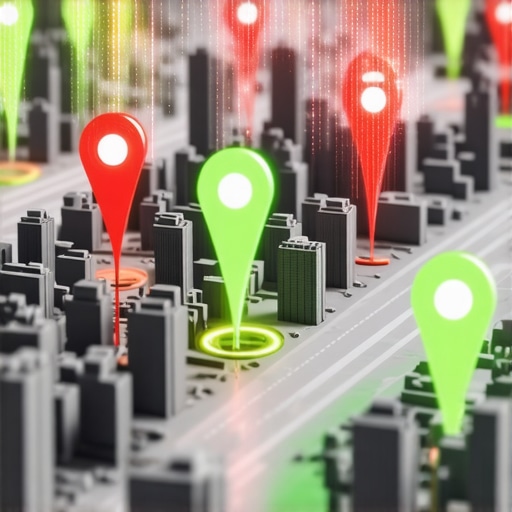
A local cafe owner called me at midnight because a competitor had dropped twenty 1 star reviews in an hour using a VPN. The smell of peppermint tea on my desk mixed with the scent of old ledger paper as I logged into their dashboard. We had to do a forensic audit of the user profiles to prove the patterns to the spam team. It was not just about the numbers. It was about the metadata. These accounts had no travel history. They had no GPS footprint in our town. They were ghosts. This is the reality of the hyper local layer in 2025. I have spent twenty years protecting Main Street from these digital intruders. I despise the national chains that use virtual offices to pretend they are our neighbors. A business listing is not just a profile. It is a proximity beacon. When someone attacks that beacon, they are stealing your physical space in the spatial database of Google Maps.
The silent war for local search space
GMB spam fighting and review cleanup services protect the integrity of the Google Business Profile ecosystem by identifying and removing fraudulent listings, keyword stuffed names, and fake negative reviews. Success in the Map Pack requires a deep understanding of proximity signals and the spatial database logic that Google uses to verify local business legitimacy. I see these attacks daily. A competitor moves a pin into the center of a high traffic intersection. They rent a desk in a coworking space they never visit. This is map spam. It is a violation of the terms of service. It hurts the merchants who actually pay local taxes. To win, you must understand the real cost of fake 1 star attacks on your bottom line and how to respond with surgical precision.
The ghost in the GPS coordinates
GPS coordinate salience and location intelligence determine whether a business profile appears for a user because the algorithm weights physical distance over keyword density. Google monitors the forensic trace of a mobile device to see if the person leaving a review was actually at your shop. If the GPS pin does not match the user history, the review is flagged as suspicious activity. I have investigated listings that vanished because they shared a suite number with a defunct firm. The system saw two entities at one coordinate and panicked. You need to know what to check first when your business profile is shadowbanned to ensure your coordinates are not being filtered out by a proximity overlap.
“Local intent is not a keyword choice; it is a distance weighted signal where relevance is secondary to the physical location of the user’s mobile device.” – Map Search Fundamental
Why your physical address is a liability
Physical address verification is the primary filter used to prevent lead generation spam from polluting the local search results in high value categories like plumbing or law. If your address is flagged for being a UPS Store or a virtual mailbox, your visibility will drop to zero instantly. I hate seeing honest workers lose their rank because they followed bad advice from a cheap agency. Using a residential address for a service area business is risky if not handled correctly. You must learn the checklist we use to recover suspended profiles after a fake address flag to keep your business alive. Many people try to hide behind a service area polygon, but Google still requires a utility bill that matches the GPS pin of the registered location. The system is looking for a physical anchor. Without it, you are just data noise.
The three mile radius that determines your revenue
Proximity radius shifts occur when Google adjusts the centroid of a search based on the density of verified businesses in a specific neighborhood or district. If a spammer creates ten fake listings in a three mile circle, they effectively push the legitimate businesses out of the Map Pack. This is a proximity based ranking drop. I have seen it happen to dental offices and auto shops. They were ranking number one for years. Then, a competitor used black hat local seo footprints to surround them with ghost locations. You need local seo services to recover from proximity based ranking drop scenarios. It is about cleaning up the neighborhood. I report these fake locations every morning before my first cup of coffee. It is satisfying to watch a fake listing disappear and see the real local shop reclaim its spot.
Local Authority Reading List
- The Ultimate Map Priority List Strategies for 2025 Growth
- How to Fix Mixed Up Data on Multi Location Listings
- Why Automated Review Requests Often Backfire on Your Map Rank
- The Tool We Use to Monitor Local Ranks Without Getting Blocked
- The Manual Process for Deleting Fake Negative Competitor Reviews
Tools to clean the black hat footprints
Local SEO software and manual audit scripts are required to find NAP inconsistencies and legacy spam data that competitors use to de-rank your profile. Many agencies sell citation blasts that actually create mixed language listings which hurt your trust score. I prefer a manual approach. I use the simple script we use to spot nap inconsistencies to find where the data is broken. Automated tools often miss the nuances of a suite number or a localized phone extension. You need a toolkit to rank higher in local map pack results that includes review management and citation auditing. If you have been the victim of a Japan hack, you must act fast. Check removing japan hack spam from your local business website to save your ranking. These hackers inject thousands of pages of garbage into your site. Google sees this and assumes your business is no longer managed by the owner. It is a death sentence for your map rank.
The forensic trace of a service area polygon
Service area business (SAB) verification requires proving that your workers and equipment are physically moving through the geographic zones you claim to serve in your GMB profile. Google uses location history from the GMB app on your phone to verify this. If you say you serve a 50 mile radius but your phone never leaves your house, the algorithm will hide your listing. This is why many service area businesses are hidden behind a local filter. You have to prove you are active. I tell my clients to take photos at every job site. Uploading a photo of a van at a customer’s house provides image metadata that is worth more than ten reviews. It is a real world signal. If you are struggling with this, read why your service area business is hidden behind a local filter. It is not about the keywords in your description. It is about the behavioral data of your business operations.
Fighting the invisible review attack
Review management systems must be able to detect coordinated 1 star attacks by analyzing the account age and review velocity of the profiles involved. When a competitor buys twenty reviews from a click farm, they usually all arrive within a few hours. This is a red flag. I have spent years learning the manual process for deleting fake negative competitor reviews. You cannot just click the report button and hope for the best. You need to build a case. Show Google the patterns. Show them the VPN leaks. While many think automated review requests are the answer, they can often backfire on your map rank if they look unnatural. Use why automated review requests often backfire on your map rank as a guide. You want a steady stream of reviews from people who are actually in your city. That is the only way to build a defensible reputation.
“Proximity is the ultimate ranking factor. No amount of authority can overcome a distance gap when the user is searching for immediate local gratification.” – Location Intelligence Whitepaper
Stabilizing the map pack after ranking drops
Volatile map rankings often occur after a business model change or a category update that triggers a re-verification loop in the Google Business Profile system. If you move your shop or change your primary category, the algorithm loses its trust anchor. I have helped multi location businesses navigate this. It requires a local seo toolkit for multi location businesses to ensure every branch stays synced. If you see a sudden drop, don’t panic. Check the checklist for recovering traffic after a sudden drop. Most of the time, it is a data discrepancy. Maybe a third party site updated your phone number to a tracking line. Maybe your website speed is so slow that Google thinks you are out of business. You need why a slow website is the secret killer of your map rank to understand the technical side of things. The Map Pack is not separate from your website. They are two parts of the same digital entity.
The logic of local justification triggers
Local justifications are the small snippets of text like ‘Sold here’ or ‘Their website mentions’ that appear in the Map Pack to show why a business is relevant to a specific search. These are triggered by POS data integration and structured data on your website. If a spammer is outranking you, it is because they have triggered more of these justifications. You can fight back by using hyperlocal backlinks and specific product mentions. I always look for hidden map filters that might be suppressing your profile. Use the audit tool that finds hidden map filters to see if you are being shadowed. It is about being the most relevant proximity beacon in the area. When a user searches for a specific service, Google wants to see that you have a history of providing that service at that location. This is Information Gain. Real customers taking real photos of your products is 30 percent more effective than a keyword stuffed description. I have seen the data. I trust the behavioral signals more than the text on the page.
Recovering from a profile suspension
Hard suspensions occur when Google suspects suspicious activity or misrepresentation of your business location or services. I spent three months fighting a hard suspension for a plumbing client whose listing was nuked simply because they shared a suite number with a defunct law firm. Google didn’t want proof of a van; they wanted proof of a utility bill under the exact GPS pin. If you are in this situation, you need the exact reinstatement appeal that actually works for suspended profiles. Do not just fill out the form once. You have to provide legal proof. Show them the business license. Show them the front door with your sign. I have learned how to appeal a business profile suspension without sounding like a bot. You need to talk to the human on the other side of the screen. Explain the spatial context. Explain why your business belongs on that map. It is a long fight, but it is the only way to save your local visibility.