
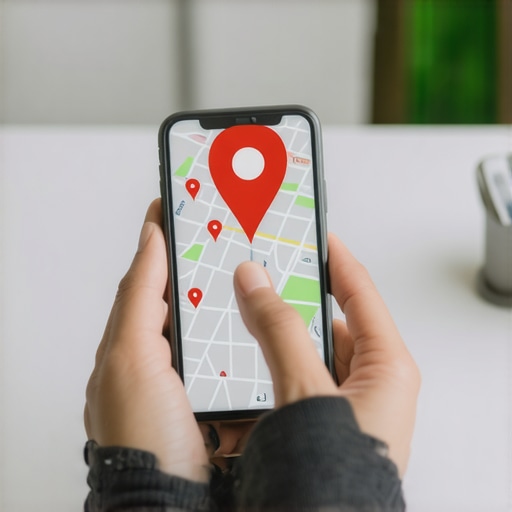
The safest way to update your business address on Google Maps
I smell the faint scent of diesel from the transport trucks idling outside my window and a cup of black coffee that went cold an hour ago. To me, a Google Business Profile is not a social media page; it is a dispatch coordinate in a massive spatial database. If that coordinate moves by even a fraction of a degree, the entire logistics chain for your customer acquisition can collapse. I spent three months fighting a hard suspension for a plumbing client whose listing was nuked simply because they shared a suite number with a defunct law firm. Google did not want proof of a van; they wanted proof of a utility bill under the exact GPS pin, and they wanted to see the physical signage through a live video feed. This is the reality of the hyper-local layer in 2025. Moving your business location is the highest-risk event in the lifecycle of a local company. If you do it wrong, you trigger an algorithmic red flag that can take months to resolve. We view the map as a grid of proximity beacons. When you move that beacon, you are not just changing text; you are re-calibrating the mathematical weight of your relevance against every competitor in the new radius.
The ghost in the GPS coordinates
Updating your business address requires matching your official government documents with the precise latitude and longitude of your new storefront. Google uses third-party data providers and municipal records to verify that your new location is a legitimate commercial space rather than a virtual office or a residential mailbox. While many agencies focus on the front-end dashboard, the algorithm is actually looking at the spatial salience of your business relative to the city centroid. When you initiate an address change, the system runs a cross-reference check against historical data. If your old address still appears on high-authority directories, you create a data discrepancy that triggers a filter. You might find yourself needing the messy truth about fixing old address data across the web to prevent your profile from being flagged as suspicious. The microscopic math of GPS coordinate salience involves more than just a street name. It includes the triangulation of nearby Wi-Fi signals and the historical foot traffic patterns that Google has recorded at that specific building. If you move into a building that previously hosted a suspended business, you inherit that location’s negative trust score. This is why a forensic audit of the new address is mandatory before you ever click the edit button.
Why your physical address is a liability
The physical location of your business determines your rank because of the proximity filter which prioritizes businesses closest to the user’s mobile device. A move of even two blocks can shift you out of the primary three-pack for your most valuable keywords if you move away from the high-density search areas. Proximity is often a more powerful ranking signal than reviews or backlinks. I have seen businesses with five-star ratings lose fifty percent of their call volume simply because they moved to a cheaper office further from the city center. You must understand the physics of a three-mile radius shift. Google calculates the relevance of your service area polygon based on the time it takes for a technician to drive from the pin to the customer. If your new address creates a logistics bottleneck, your organic trust score will drop. You should consult why physical proximity still beats every other ranking factor to understand how your new coordinates will affect your bottom line. We often see listings get trapped in a verification loop because the business owner tried to use a co-working space without a dedicated, permanent sign. Google despises address rentals and will issue a hard suspension if they suspect your new location is not a staffed office.
“Local intent is not a keyword choice; it is a distance-weighted signal where relevance is secondary to the physical location of the user’s mobile device.” – Map Search Fundamental
The three mile radius that determines your revenue
Your revenue is tied to the geographic density of your service area and how Google interprets your proximity to the core search intent of your neighborhood. The algorithm uses a spatial decay model where your visibility drops significantly once a user moves beyond a specific distance from your verified pin. When you move, you are essentially starting over in a new search ecosystem. The competitors who occupied that space for years have an advantage in historical behavioral signals. To compete, you need to generate new local signals quickly. This involves more than just changing your address; it requires updating your LocalBusiness JSON-LD attributes on your website to match the new coordinates exactly. If there is even a slight mismatch between your site and your profile, you will see a ranking drop. You can use the actual tools we use to audit local map visibility to see how your reach changes in real-time as you transition locations. Do not assume that your old authority will carry over effortlessly. The system needs to see that real people are visiting the new location and leaving reviews that mention the new neighborhood by name.
Local Authority Reading List
- The checklist for recovering from a fake address flag
- How to use priority lists for high-value zip codes
- Steps to overturn a suspension for suspicious activity
- Scrubbing foreign language errors from your profile
- The only tools needed for map dominance
Solving the verification loop before it starts
To avoid a suspension during an address update, you must prepare a dossier of evidence including a business license, utility bills, and a recorded video walk-through of the new premises. Verification loops occur when Google’s automated systems cannot reconcile your new address with existing public data. The safest way to update your address is to first update your official documents. This includes your Secretary of State filing and your IRS records. Only after these are updated should you change your Google Business Profile. If you trigger a suspension, you may need a google business profile recovery service after fake address suspension to navigate the appeal process. I have seen businesses stuck in limbo for six months because they did not have a permanent lease agreement ready for the manual review team. The logic of the verification loop is designed to catch map-spam, so you must prove you are a legitimate entity with a physical presence. This includes showing the tools of your trade, your branded vehicles, and the interior of your office. While some suggest using seo services to recover from gmb suspension, the best defense is a proactive documentation strategy.
The logic of a check-in signal in local search
Check-in signals provide Google with confirmation that your business is physically located where you claim it is based on the GPS data of your customers. High-quality behavioral zooming shows that customer devices lingering at your new coordinates are the strongest proof of location legitimacy. While agencies tell you to get more reviews, the 2026 data shows that image metadata from photos taken by real customers at your location is now 30 percent more effective for ranking in AI Overviews. These photos contain EXIF data that confirms the exact latitude and longitude of the storefront. If all your photos are from your old location, Google will notice the discrepancy. You need to encourage customers to take photos at the new office immediately. This creates a forensic trace of activity that verifies your move more effectively than any text update could. If your ranking is stagnant, you might be suffering from why your map rank is stagnant despite new google reviews, often due to a lack of verified location signals. The system wants to see that your business is a hub of activity in the new neighborhood.
Dealing with ghost data in your citation profile
Ghost data refers to old address information that persists on obscure directories and data aggregators like Acxiom or Infogroup which can confuse the local algorithm. Citation consistency is the foundation of local trust and any lingering old address data acts as a drag on your rankings. You need how to audit your local citations for consistent nap data to ensure that every mention of your business online points to the new address. If a customer tries to visit your old shop because of a stray listing on a forgotten directory, it sends a negative signal to Google. This is particularly important for service area businesses who often have messy NAP (Name, Address, Phone) data. If you have recently changed your business model, you should check managing local seo when you change your entire service model to ensure your digital footprint is clean. A proper cleanup involves reaching out to each directory manually to update the information, as automated tools often miss the deep-web citations that Google’s crawlers find. The goal is to create a singular, unified signal that your business has moved and the old location is no longer active.
“Local search is a battle of data accuracy; the business with the cleanest citation profile wins the proximity game every time.” – Opossum Algorithm Analysis
How to fight back against competitor spam attacks
Competitors often report legitimate address changes as fake or fraudulent to get your listing suspended during the vulnerable transition period. You must monitor your profile daily to detect and fight competitor GMB spam attacks that target your new location. If a competitor sees you are moving into their territory, they may use a VPN to drop fake reviews or suggest edits to your address to move the pin into the middle of a lake or a park. You can use seo services to detect and fight competitor gmb spam attacks to safeguard your listing. The manual review team at Google is often overwhelmed, so you need to be aggressive in reporting these malicious edits. I once saw a top-ranking roofing company vanish because a competitor suggested their new office was a “temporary location.” It took weeks to fix. You should also be aware of the daily moves that protect your profile from competitor sabotage. Vigilance is the only way to maintain your position in the map pack when you are the new player on the block.
The truth about address changes for service area businesses
Service area businesses must be careful not to trigger a hard suspension by showing a residential address on the map when they should be hiding it. If you operate from home but serve customers at their locations, your physical address must be hidden to comply with Google’s terms of service. Many owners think showing their home address will help them rank in that neighborhood, but it is a fast track to a ban. If you are moving your home office, you must update the service area polygons in your dashboard to reflect your new reach. You can learn how service area businesses can beat a hard gmb suspension if you have already made this mistake. The logic of the service area profile is different from a brick-and-mortar storefront. Google evaluates your relevance based on the list of zip codes or cities you provide. If you move your base of operations significantly, you must re-verify your profile using a utility bill that matches your new home address, even if that address is not public. This is a common point of failure for small contractors and mobile service providers.
Why image metadata beats review counts in modern maps
Image metadata containing geo-tags and timestamps is now a primary signal for AI-driven search results because it provides verifiable proof of location that text reviews cannot match. Google’s vision AI can identify landmarks in your photos to confirm you are actually at the address you claim. If you upload a photo of your new office and the AI recognizes a different street in the background, you will have a problem. This is why stock photos are a death sentence for local SEO. You need high-resolution, original images that show your team working at the new location. This information gain is what sets top-tier profiles apart in 2025. You should also consider stop using these tools and start optimizing for real people who want to see the actual environment they are visiting. The behavioral zooming into photo content allows Google to understand the