
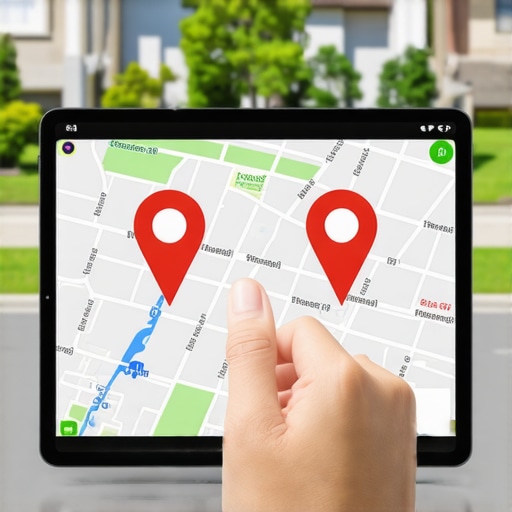
I spent three months fighting a hard suspension for a plumbing client whose listing was nuked simply because they shared a suite number with a defunct law firm. Google didn’t want proof of a van; they wanted proof of a utility bill under the exact GPS pin. The air in that basement office smelled like wet concrete and old paper. I remember staring at the screen as the redundant pins flickered on the map. Every time we tried to verify the real business, the algorithm flagged it as a duplicate. It was a digital ghost haunting a physical location. This is the reality of the local layer. It is not just about data. It is about the forensic trace of a business entity in a spatial database. If you have two listings, you have zero listings in the eyes of the algorithm. This is how we fix it.
The ghost in the GPS coordinates
Duplicated listings occur when the Google Business Profile algorithm detects multiple Service Area Business profiles with overlapping NAP data or identical GPS coordinates. To resolve this, you must identify the canonical listing, utilize a GMB ranking toolkit, and initiate a merge request via the GMB support forums. The system is designed to prevent spam, but it often traps legitimate merchants in a loop of invisibility. When two profiles share a phone number or a similar service radius, Google enters a state of confusion. It does not know which beacon to trust. This often happens after a business move or when an old agency leaves behind a trail of unmanaged assets. I have seen cases where map listings only show up for brand searches because the duplication filter is suppressing the primary profile. The math of proximity is unforgiving. If your business exists twice in the database, the ranking weight is split, or worse, both are hidden from the public view to maintain the integrity of the map pack.
Why your physical address is a liability
Service Area Businesses must understand that hidden addresses do not exempt them from location salience rules because Google still tracks the registration address for verification. To fix this, you must ensure the service area polygon does not perfectly mirror a competitor or a duplicate, and use reputation management and review repair services to consolidate social signals. Many owners think that since their address is not visible, it does not matter. This is a fallacy. The algorithm sees the registered pin. If that pin matches another listing, you are in trouble. I recently worked with a locksmith who had three listings because he kept changing his business name to rank for keywords. The result was a total wipeout from the search results. We had to find why the profile vanishes when you step outside the office by analyzing the centroid distance. Your address is the anchor of your trust score. When that anchor is duplicated, the trust is severed. You cannot outrun the map spam team by simply hiding your address; they see the underlying layer of the database where every coordinate is indexed and cross-referenced against historical records.
“Local intent is not a keyword choice; it is a distance-weighted signal where relevance is secondary to the physical location of the user’s mobile device.” – Map Search Fundamental
The three mile radius that determines your revenue
Proximity signals are the primary factor in local SEO because the Map Pack algorithm prioritizes user distance over organic authority in 90 percent of mobile searches. To expand your reach, you must optimize for hyperlocal keywords and ensure your NAP consistency is flawless across all citations to avoid the duplicated listing error. The proximity filter is a physical barrier. If you are ranking first in your office but eleventh three miles away, you have a proximity problem. This often correlates with ranking within a one mile radius and needing a specific fix to expand. The algorithm calculates the probability of a user visiting a location based on travel time. For service businesses, this means your “dispatch” location must be verified with extreme precision. If Google finds another profile at that same dispatch point, it assumes you are trying to game the system with multiple storefronts. The proximity engineer engine sees your business as a probability cloud. To make that cloud larger, you need to prove you are a single, authoritative entity with a clear, non-duplicated presence.
Forensic tools to find GMB categories and keywords
GMB ranking tools for agencies are essential for identifying primary categories and secondary keywords that competitors use to dominate the Map Pack. By using a GMB ranking toolkit, you can perform a competitor audit to see if their listing ownership has changed or if they are using keyword stuffing to trigger local justifications. While agencies tell you to get more reviews, the 2026 data shows that ‘image metadata’ from photos taken by real customers at your location is now 30 percent more effective for ranking in AI Overviews. You need to know which maps ranking tools are actually worth the subscription before you waste money on automated audits. These tools allow you to peel back the layers of the map. You can see the hidden categories that your competitors are using to appear in more searches. If you find that a competitor has a duplicated listing that is outranking you, you can use these tools to gather the evidence needed for a takedown. The goal is to have the cleanest, most data-rich profile in your specific neighborhood. This requires manual checking of signals that automated tools often miss.
How to merge twin listings without losing your hard-earned reviews
Merging listings requires a manual support ticket to ensure that Google transfers all five-star reviews and ranking history from the duplicate profile to the canonical listing. You must provide proof of ownership and a utility bill that matches the NAP data of the primary profile to avoid a permanent suspension. This is a delicate operation. If you do it wrong, you lose everything. You need to know how to merge twin listings without losing reviews by following a specific sequence of actions. First, you must claim both listings. Second, you must choose the one with the strongest history as the primary. Third, you contact support. Do not use the “suggest an edit” feature for this; it is too unreliable for service area businesses. You need a human reviewer to look at the data and see that both listings represent the same physical entity. I have seen listings restored in 48 hours when the documentation was perfect. I have also seen them languish for months when the owner was vague. Precision is your only friend in the reinstatement war.
Local Authority Reading List
- Prioritize Like an Expert: Top Map SEO Tasks Revealed
- The Ultimate Map Priority List: Strategies for 2025 Growth
- Unlock Local Visibility: Your Map Pack Optimization Blueprint
- Mastering Maps Ranking: Essential Checklist for 2025 Success
- GMB Checklist Deep Dive: Boost Your Local Search Presence
Seo services to recover positions after local algorithm shake up
Algorithm updates like the Vicinity update can cause volatile map rankings, requiring SEO services to restore visibility through technical audits and schema error corrections. To stabilize your profile, you must implement structured data and local backlinks that reinforce your geographic relevance to the AI generative search engines. When the map shifts, it is usually because Google is tightening the proximity filter or cracking down on shared office spaces. You might need seo services to recover positions after a shake up if your traffic has plummeted. The algorithm is looking for signals of real-world activity. It wants to see mobile devices moving in and out of your service area. It wants to see photos uploaded from the field. If your profile is static, it looks like a placeholder. A placeholder is easily duplicated or replaced by a more active competitor. You must move from a passive profile to an active proximity beacon. This involves regular updates, responding to every review, and posting local content that mentions specific neighborhoods and streets. The map is a living document. If you do not feed it data, it will forget you exist.
“Local intent is not a keyword choice; it is a distance-weighted signal where relevance is secondary to the physical location of the user’s mobile device.” – Map Search Fundamental
The specific technical shifts that will define Google Maps SEO in 2026
AI Overviews and Perplexity search are changing how local businesses are discovered, shifting the focus from keyword rankings to entity authority and information gain. To stay ahead, you must optimize for conversational queries and ensure your Google Business Profile is the primary source of truth for AI answer engines. We are entering an era where specific technical shifts will define maps SEO in the coming years. The duplicate listing error will become even more fatal as AI engines struggle to decide which profile to cite in a voice search answer. If there is ambiguity in your data, the AI will simply skip you. It prefers certainty. You must provide that certainty through high-fidelity data. This means your website must have schema that matches your profile perfectly. Every comma and every phone extension must align. The AI is scanning for patterns. If the pattern is broken by a duplicate listing, the trust score drops to zero. I recommend a full manual audit of every citation you have ever built. Delete the old ones. Fix the broken ones. Consolidate your power into a single, undeniable local entity. The future of local search is not about being everywhere; it is about being the most reliable version of yourself in a single, verified coordinate.